
Privacy-first analytics counts your visits and traffic sources without cookies or profiles that follow people around the web. On most sites it runs without a cookie banner. You’ll also see it sold as privacy-friendly or privacy-focused analytics.
This list is for anyone looking for a privacy-friendly Google Analytics alternative, from a personal blog to a company site. I checked nine privacy-first analytics platforms, free and paid, against their own docs, pricing pages and dashboards. Here they are: Statable, Plausible, Fathom, Simple Analytics, Umami, Matomo, Pirsch, Cloudflare Web Analytics and GoatCounter. Let’s break them down.
Statable: The Whole Product on the First Plan
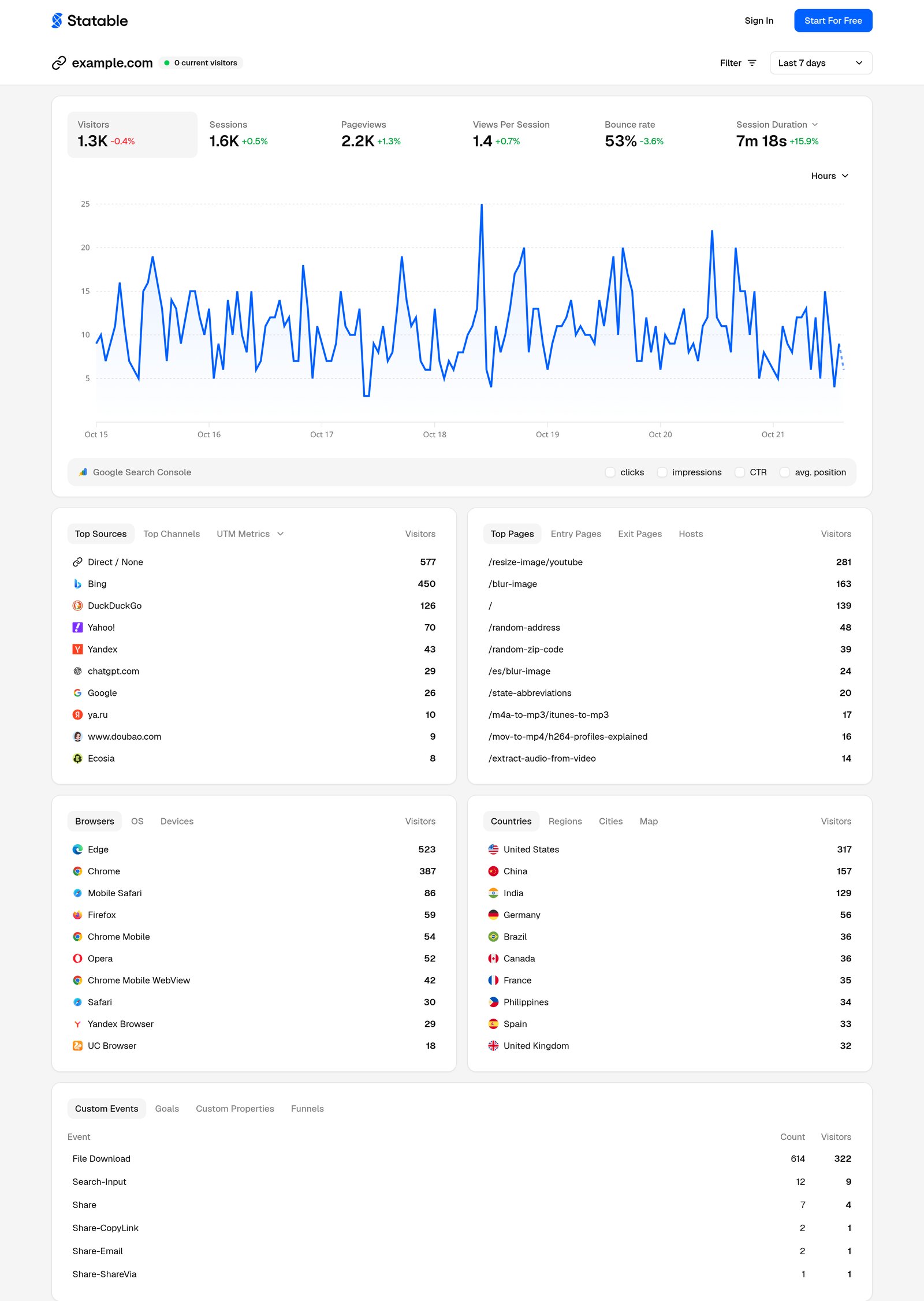
By design, Statable sets no cookies, and its visitor ID resets every day. Your data stays in the Netherlands, on servers it owns. It suits you if you’re leaving Google Analytics with history to keep.
What you get:
- Your GA4 history, imported as daily reports, with no limit on how long data is kept
- Answers in ChatGPT or Claude through an official MCP server. Ask why traffic fell on Tuesday, and it splits the drop by source, page and country
- Setup without the dashboard: an AI assistant, or a script using the Stats API, can add your site, fetch the snippet and create goals and funnels. It can’t delete your data
- Search Console queries shown next to the rest of your traffic
- Embeddable widgets that show only the data you pick
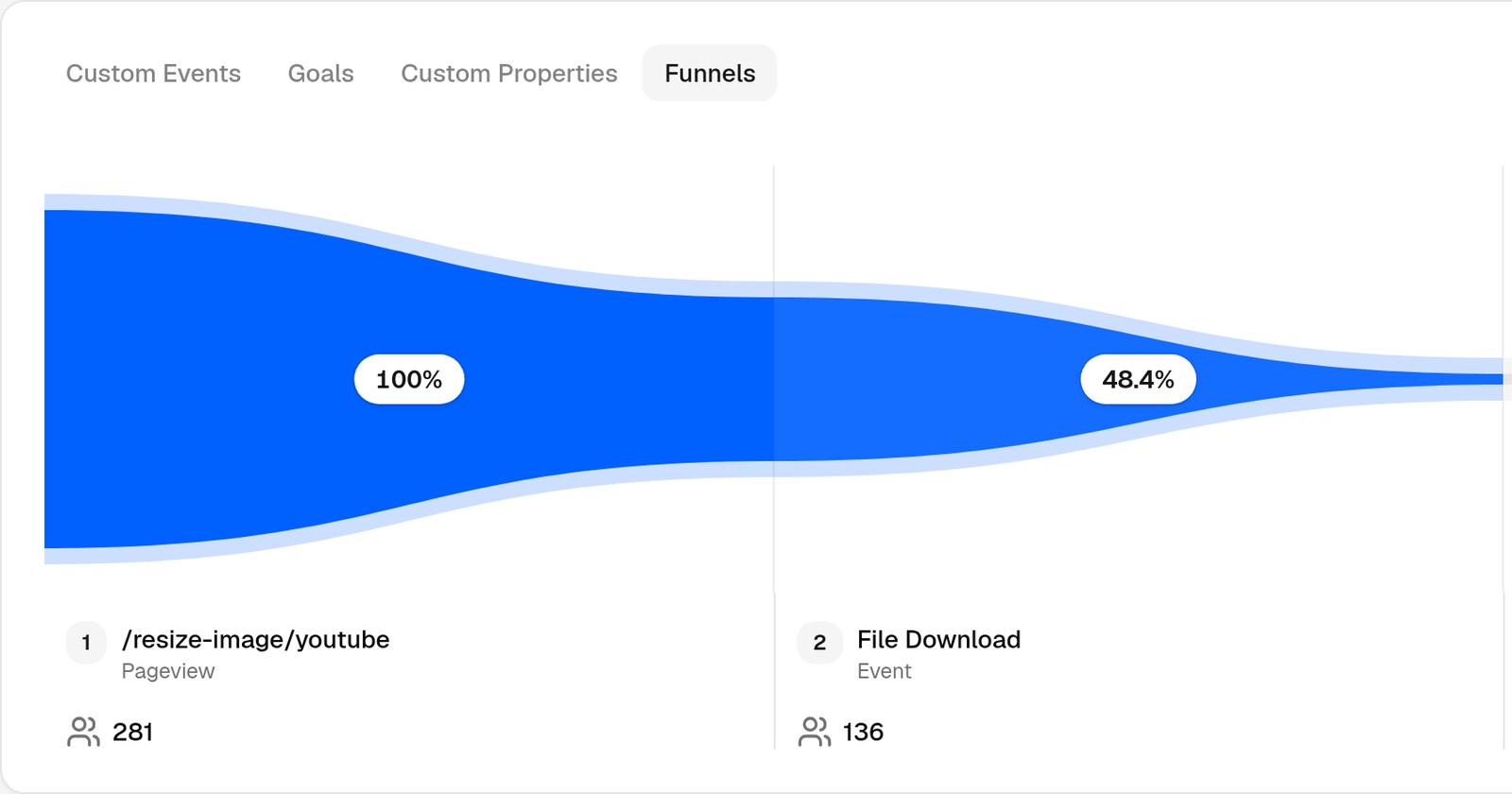
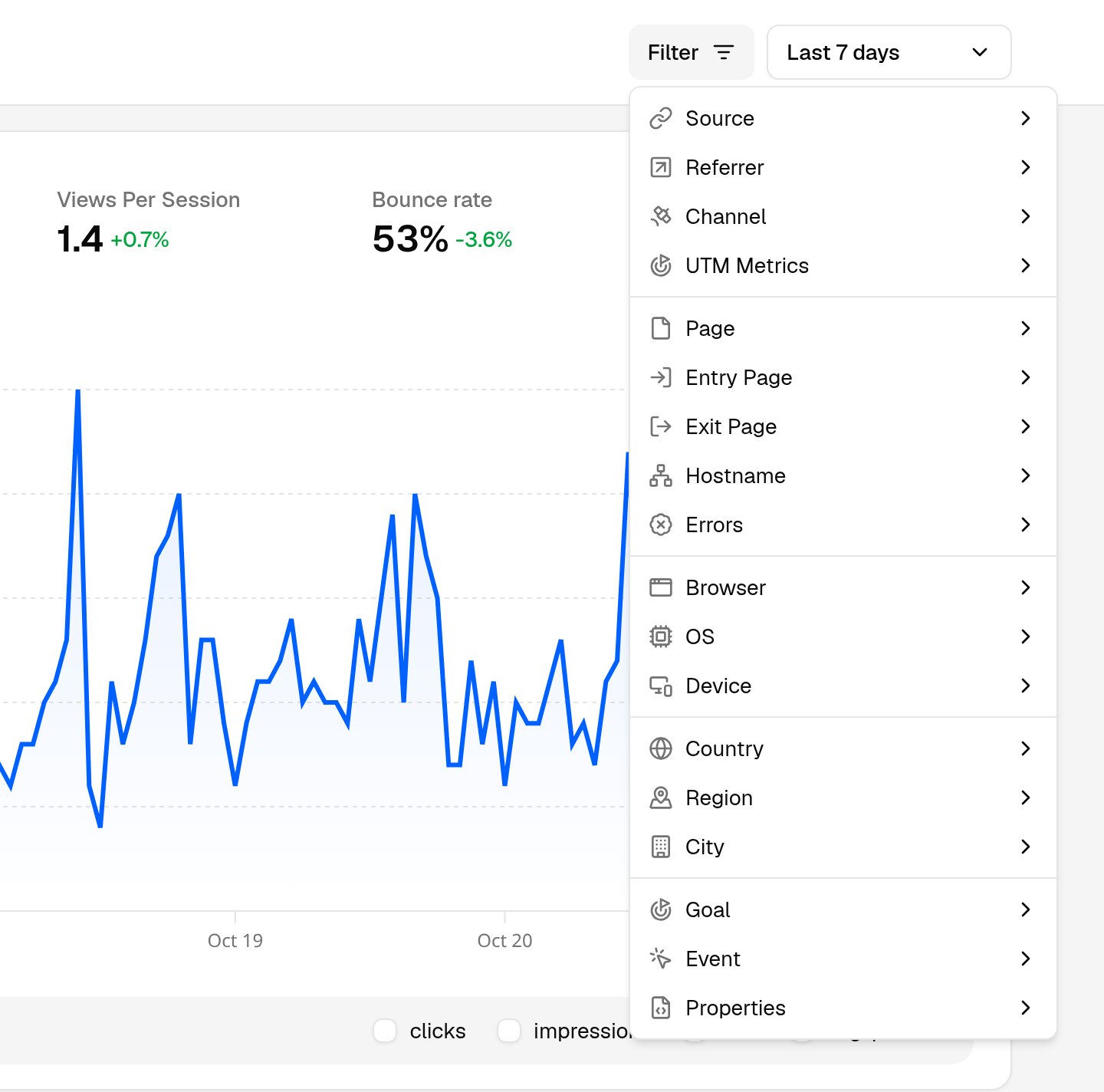
Pricing. $9 a month covers 10,000 pageviews and events combined. Bigger plans only raise that allowance, and there’s no cap on sites.
Watch out. You pay once the 30-day trial ends. Only .edu, GitHub Pages and GitLab Pages sites stay free, with its widget shown and a public dashboard. It’s cloud-only with closed code, and the daily ID rules out cohorts and retention.
Plausible: Privacy-Friendly Analytics on a Single Page
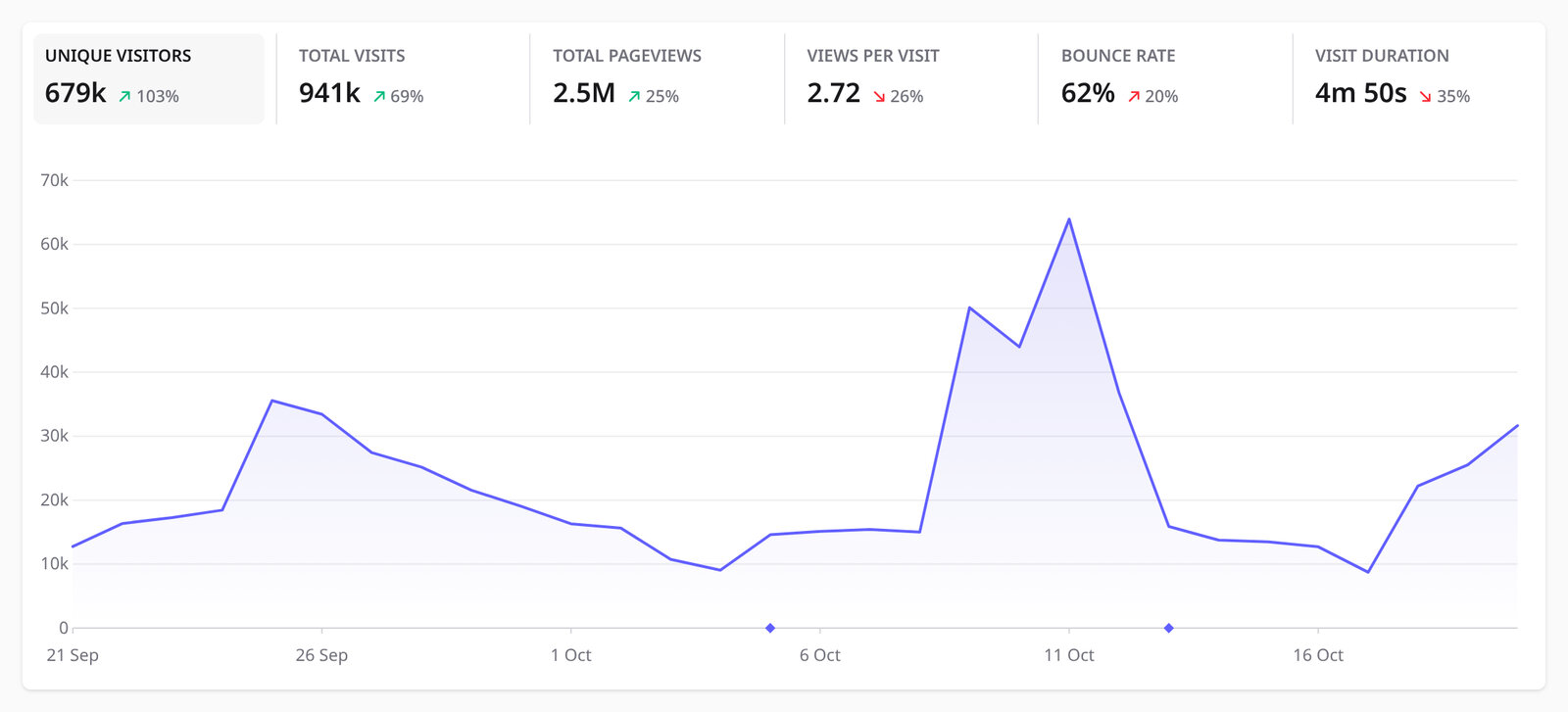
Plausible is open-source analytics from a ten-person Estonian company. It’s a good match if you blog or run a small team and want one clean page of numbers.
What you get:
- A visitor ID that lasts one day, with no IP addresses stored
- Goals, custom events, a Google Analytics importer and reports by email or Slack on every plan
- Visitor data stored on Hetzner servers in Germany, with EU-owned providers only
- A free Community Edition for your own server
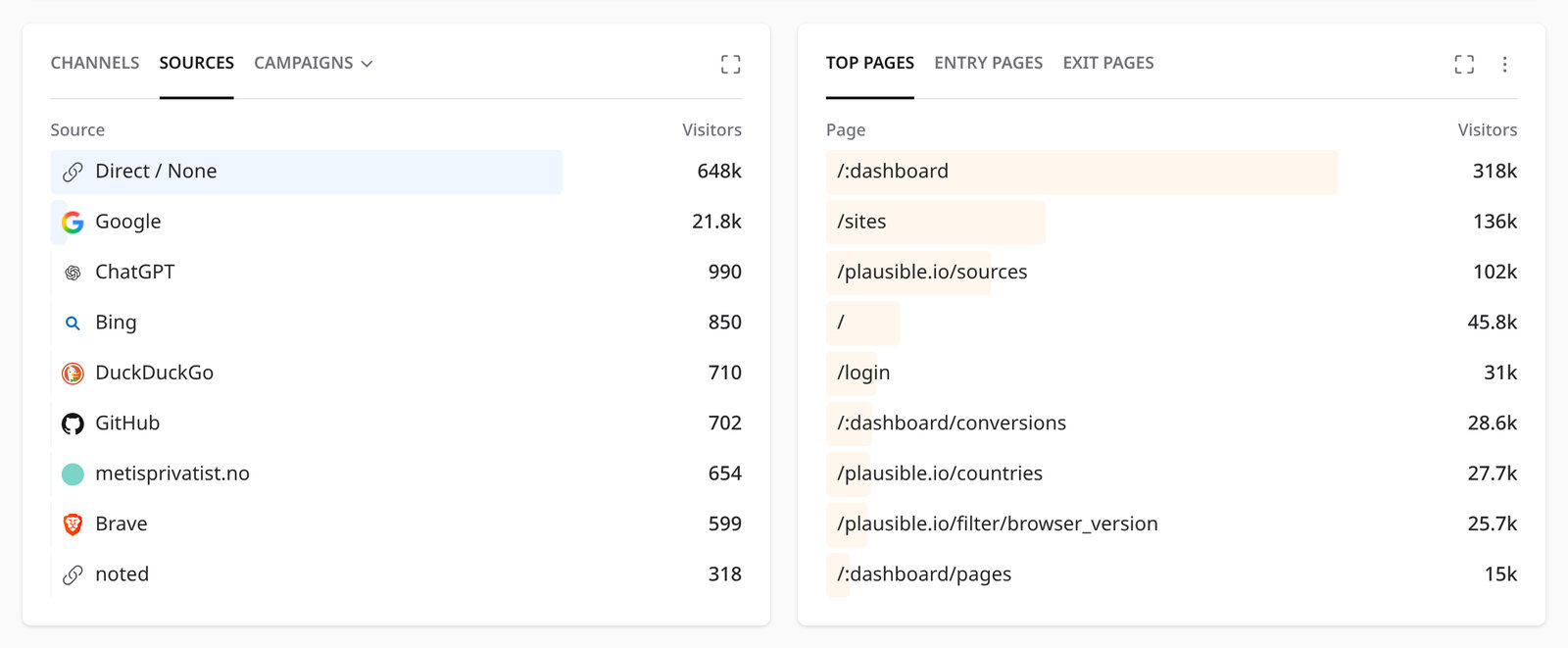
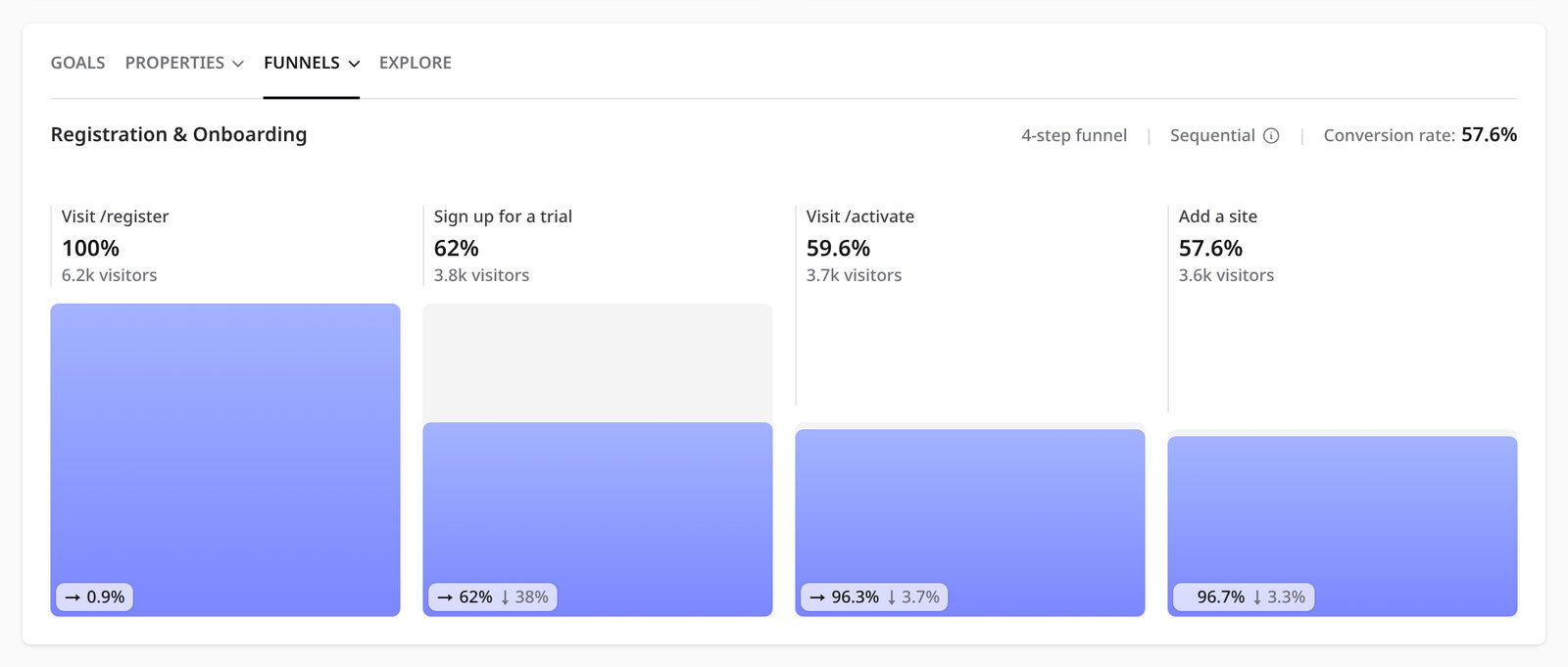
Pricing. Starter runs $9 a month, covering one site and 10,000 pageviews, with a 30-day trial. Growth covers three sites for $14, and Business covers ten for $19.
Watch out. Funnels and the Stats API don’t arrive until Business, and the self-hosted edition skips funnels.
Fathom: EU Isolation, US Storage
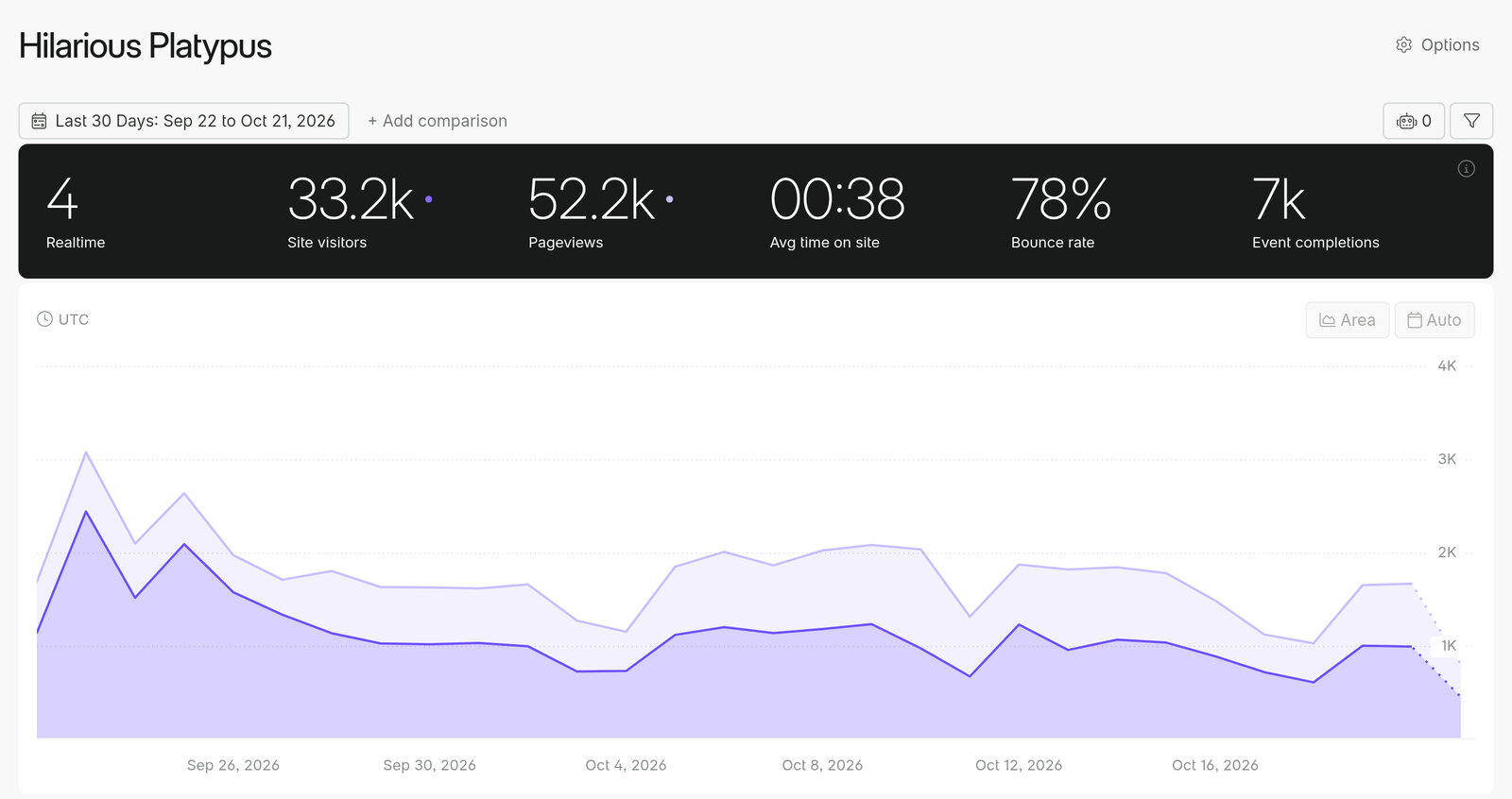
Built by a Canadian company, Fathom is a paid, cookieless service. It suits agencies and businesses that juggle a portfolio of sites and want simple reports to share.
What you get:
- A visitor ID that resets at midnight UTC
- EU isolation: visits from the EU lose their IP address on EU servers
- Revenue values on events, UTM tracking, shared dashboards and an API, whatever the plan
- A GA4 importer, which may run for up to two days
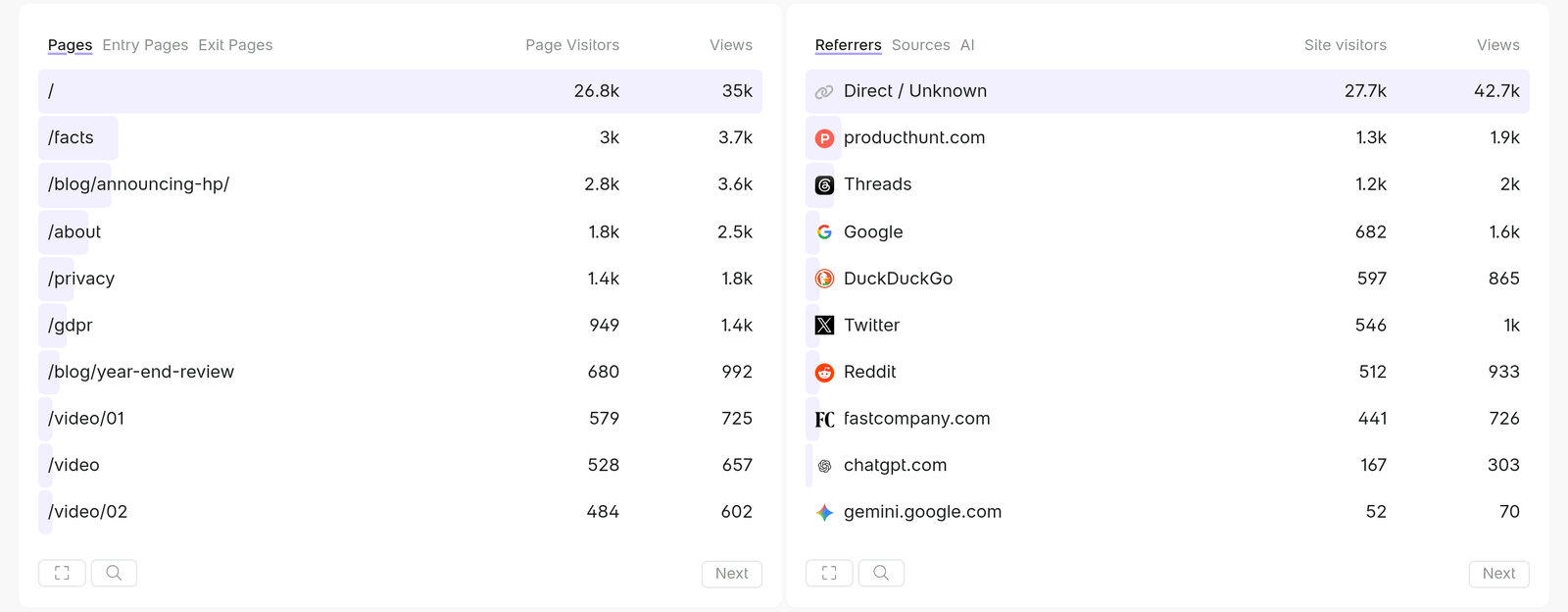
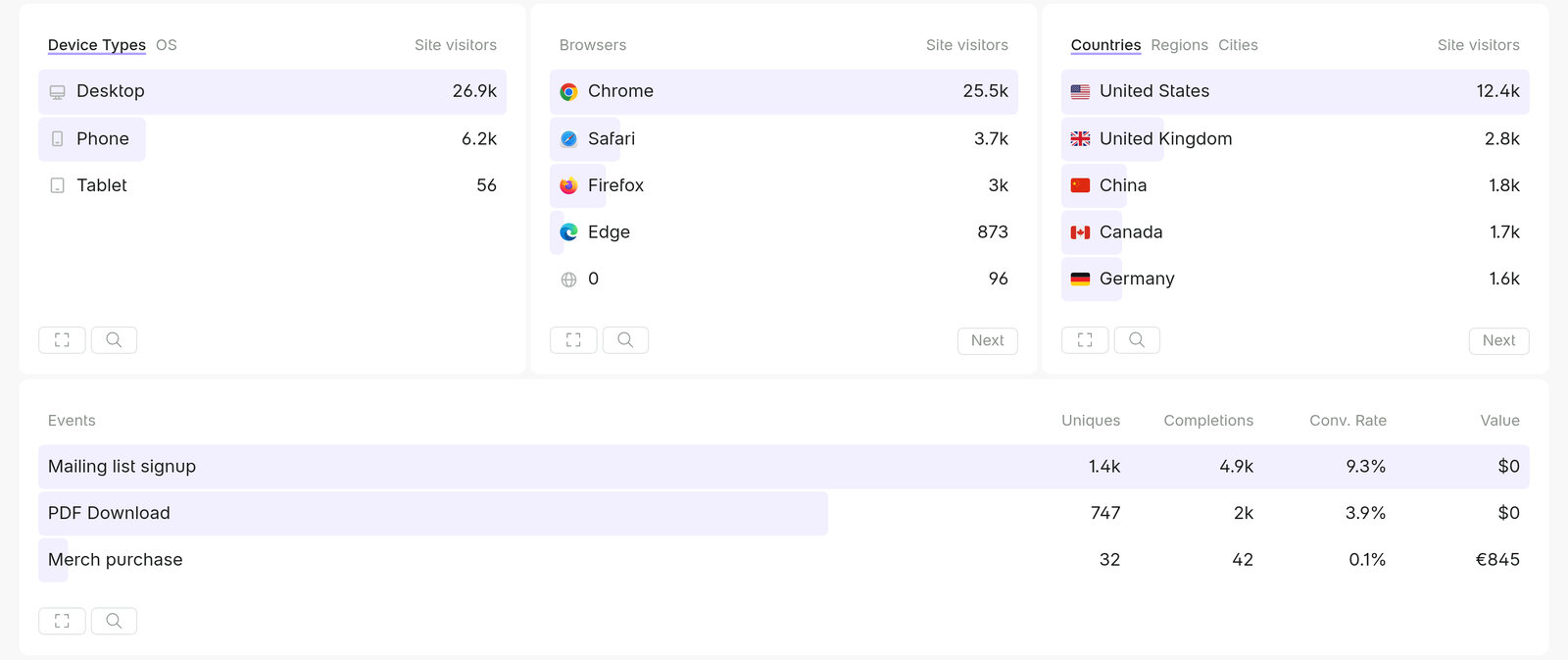
Pricing. The entry plan is $15 monthly for 100,000 pageviews and events, after a one-week trial. You get 50 sites or more on each plan, and another 50 cost $10 a month.
Watch out. There aren’t any funnels, and it’s cloud-only. The stripped records sit on US servers.
Simple Analytics: Counting Without Visitor IDs
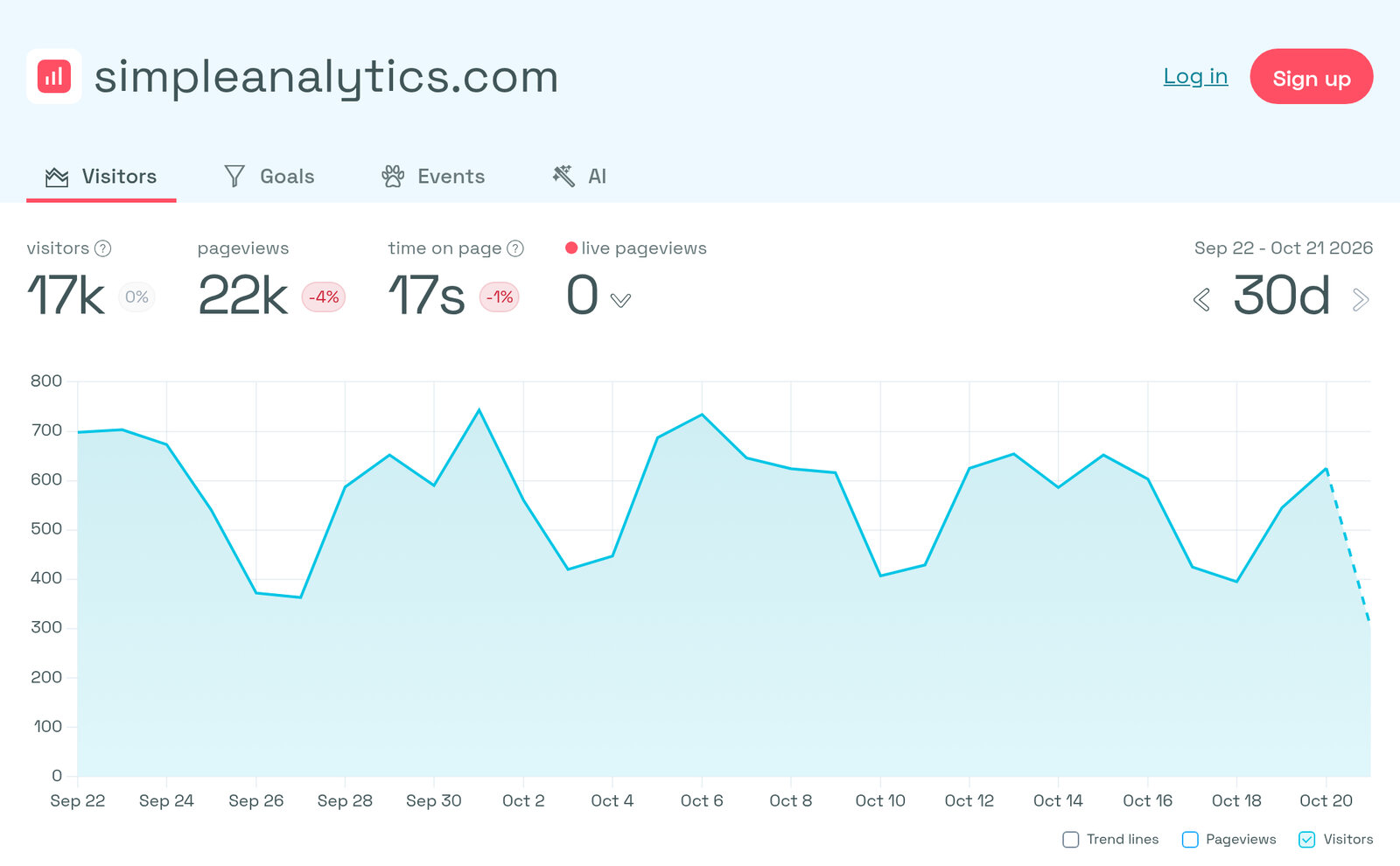
Simple Analytics is a cookieless Dutch service that uses no visitor IDs and drops every IP address. It’s built for you if you want to collect as little as possible. Its free plan fits hobby projects.
What you get:
- Unique visits worked out from the referrer, and countries from the time zone
- Hosting in the Netherlands and Germany
- Events, goals with multi-step funnels and a Stats API once you pay
- An importer for GA4 data
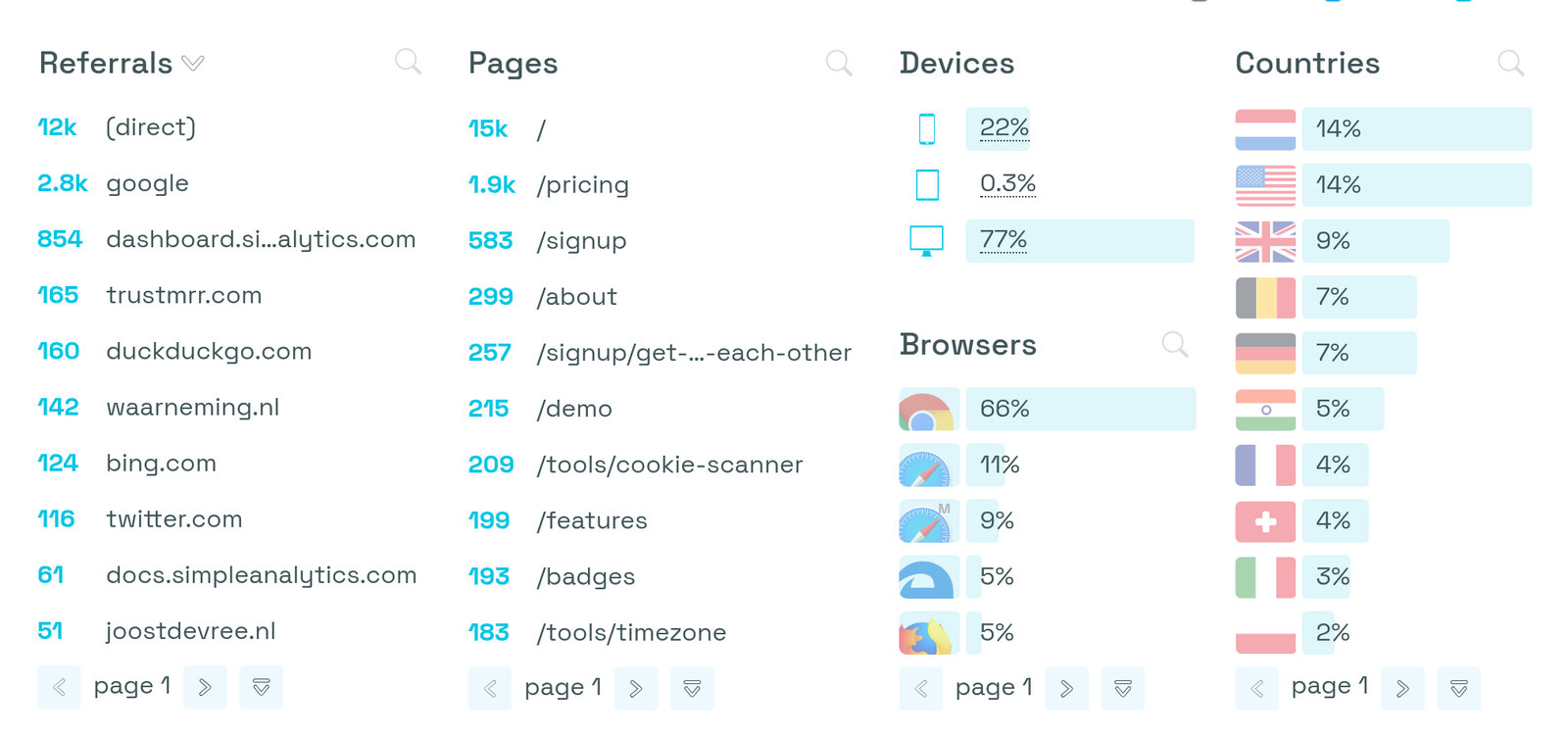
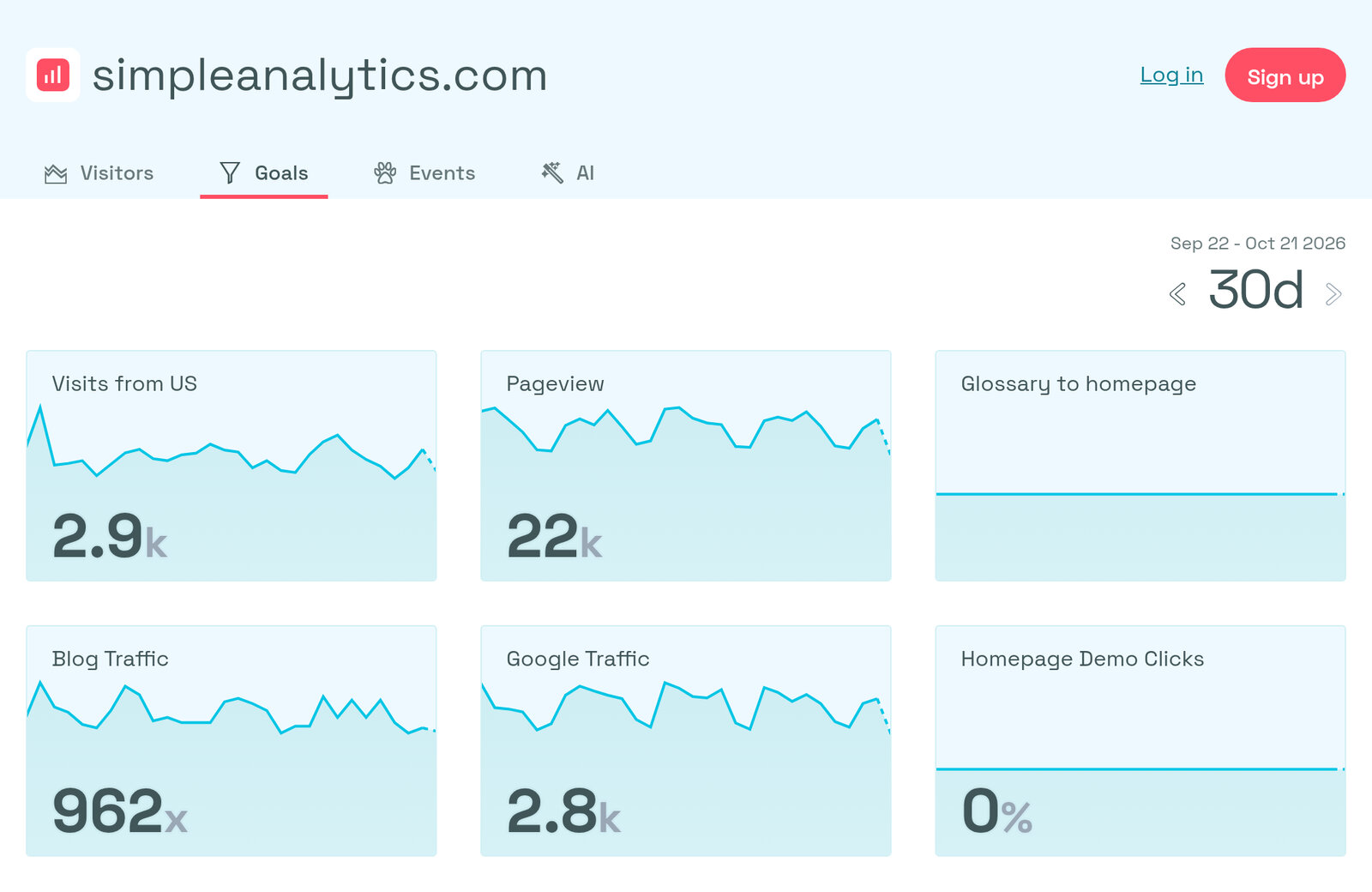
Pricing. Free covers five sites and 30 days of history, with a badge on your site. The paid plan costs $20 monthly for 100,000 pageviews and events, 10 sites and three years of data.
Watch out. Locations don’t go past the country. If you opt in to its AI assistant, your questions and the analytics data needed to answer them go to OpenAI in the US.
Umami: Privacy-Focused Analytics Under an MIT License
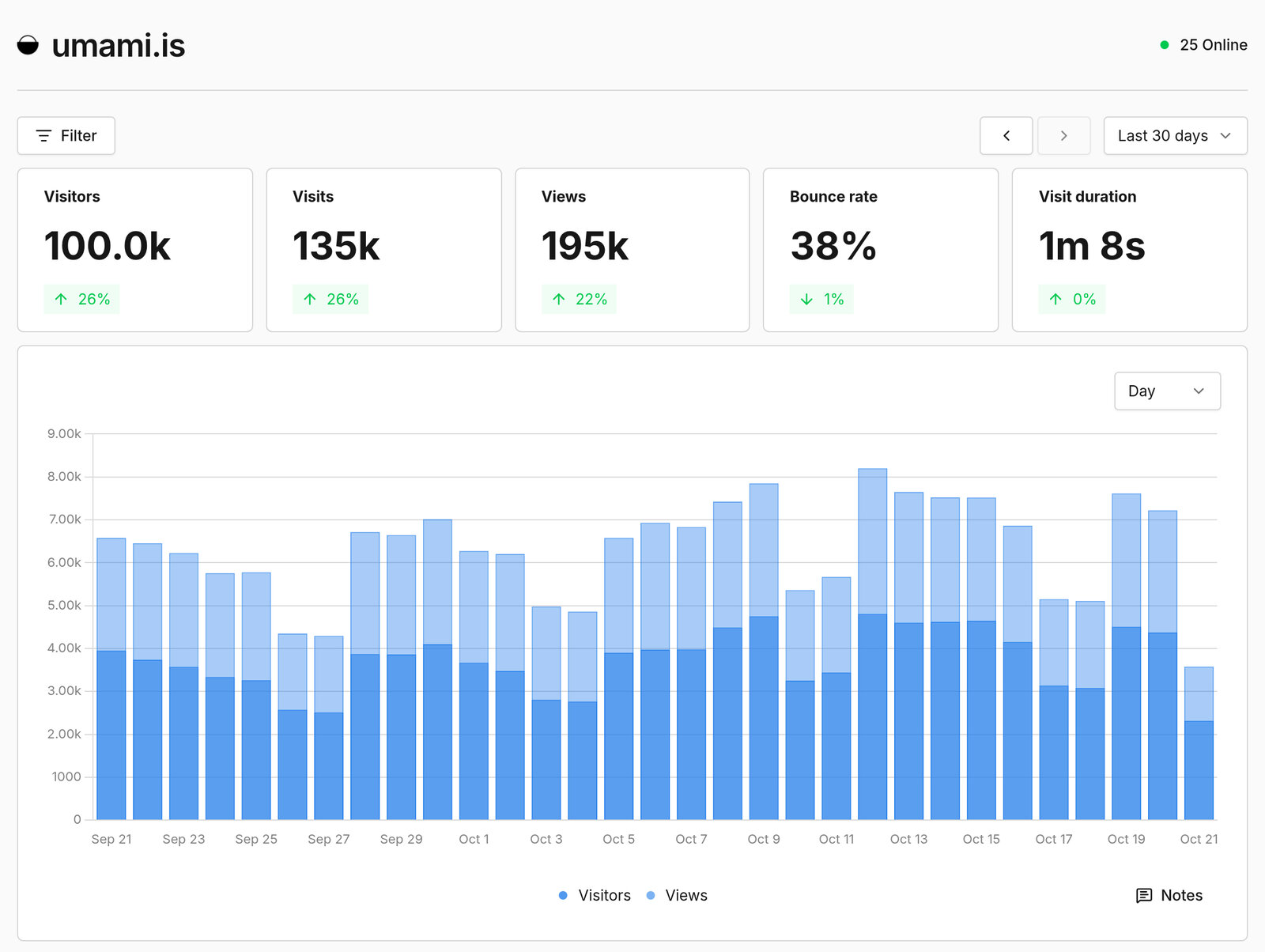
Umami is MIT-licensed, open-source analytics that runs on your server or in Umami Cloud. It fits developers who run their own servers, and small sites on a free cloud plan.
What you get:
- Funnels, retention, journeys, revenue and UTM reports on every plan
- An EU or US cloud region, picked when you sign up
- An official, read-only MCP server on Pro and above, or when self-hosted
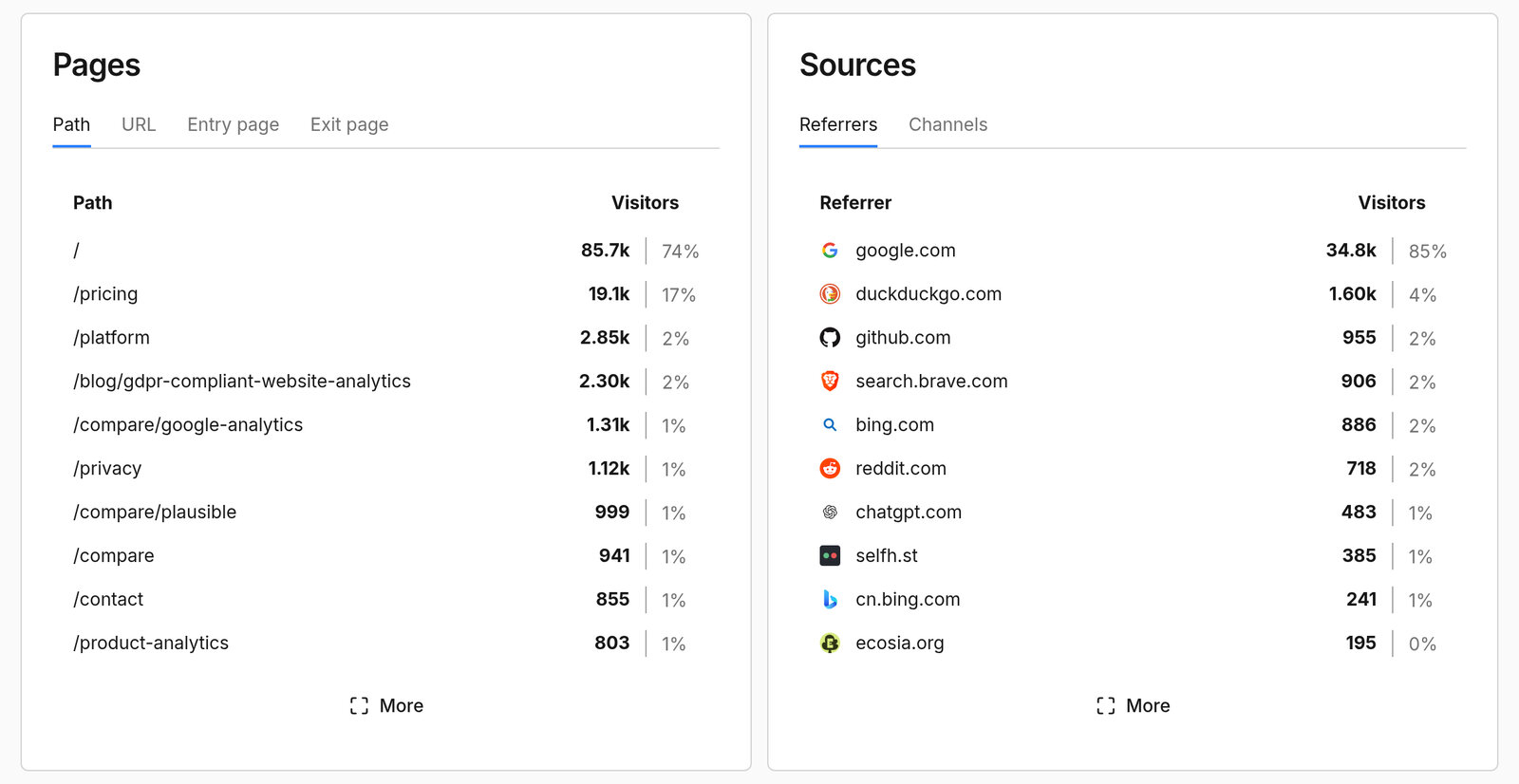
Pricing. Hobby costs nothing and covers one site with 100,000 events a month. Pro runs $20 for 1 million events and 20 sites. The $200 Business plan adds session replays and heatmaps.
Watch out. By default the visitor ID can last a calendar month. You also can’t import GA4 data on your own.
Matomo: Enterprise Depth, Cookies On by Default
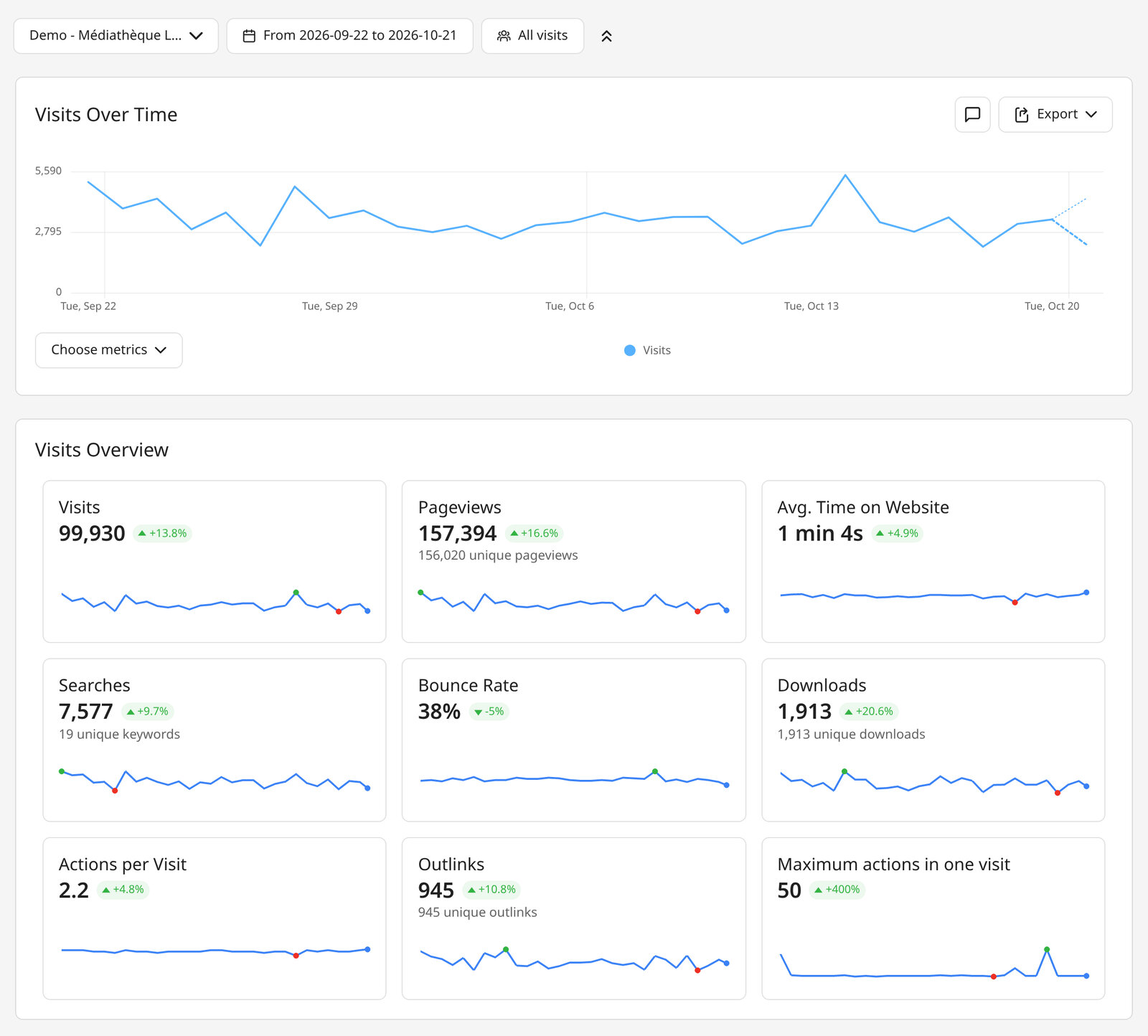
Matomo has been around since 2007, when it launched as Piwik, and it’s the deepest open-source suite here. Host it yourself or pay for Matomo Cloud. It suits enterprises and government bodies that need detailed reports or full control of their data.
What you get:
- A/B tests, heatmaps, funnels and session recordings
- A Frankfurt-hosted cloud certified to ISO 27001
- A Google Analytics importer, a full HTTP API and a GDPR Manager
- An official MCP server, in the cloud or self-hosted
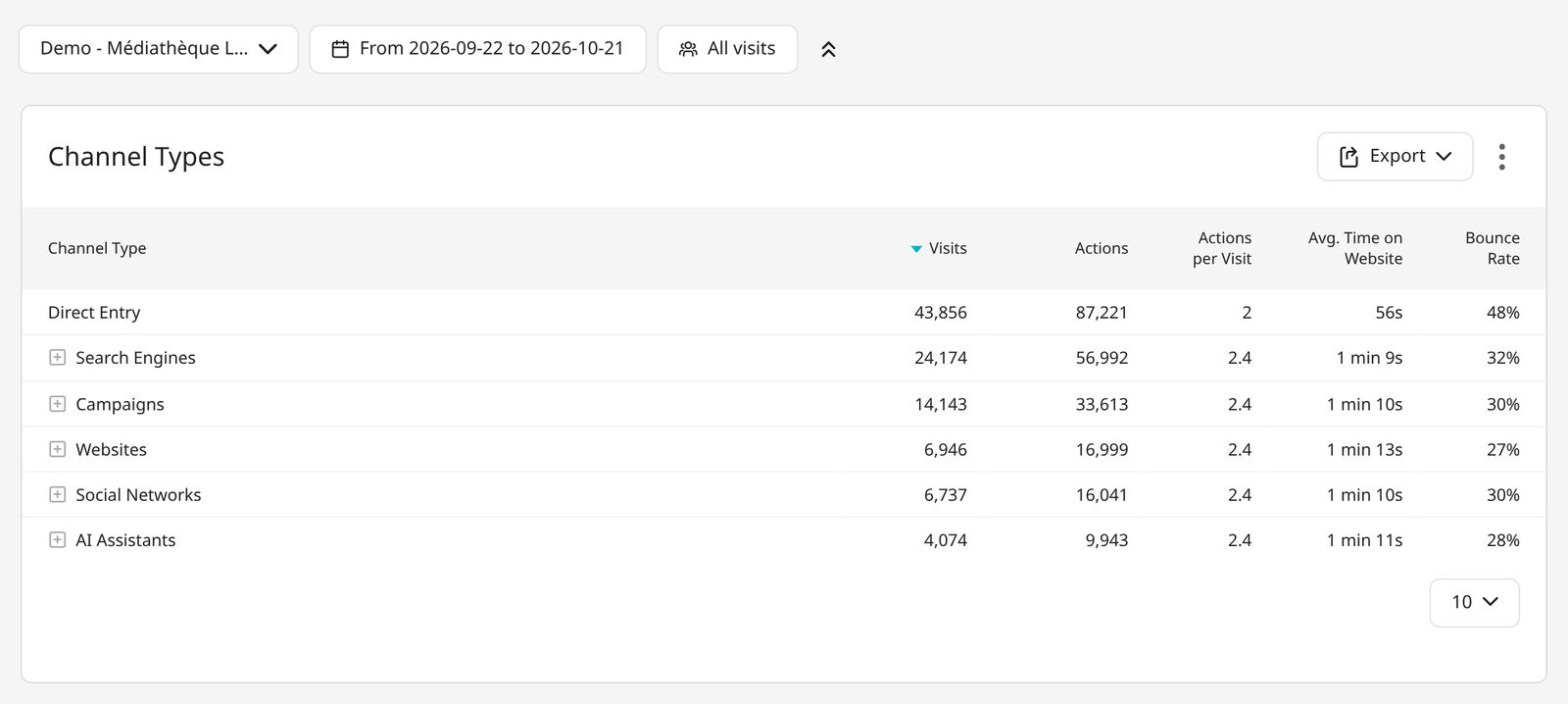
Pricing. The cloud version starts at $26 (€22) monthly before tax, covering 50,000 hits and 30 sites. Self-hosting is free, but funnels, heatmaps and recordings are paid add-ons there. Bundles start at €275 a month.
Watch out. Out of the box it sets a cookie that lasts 13 months. One setting makes it cookieless and can spare you the consent banner. Setup still takes longer than with the simpler tools here.
Pirsch: 50 Sites for $6, Hosted in Germany
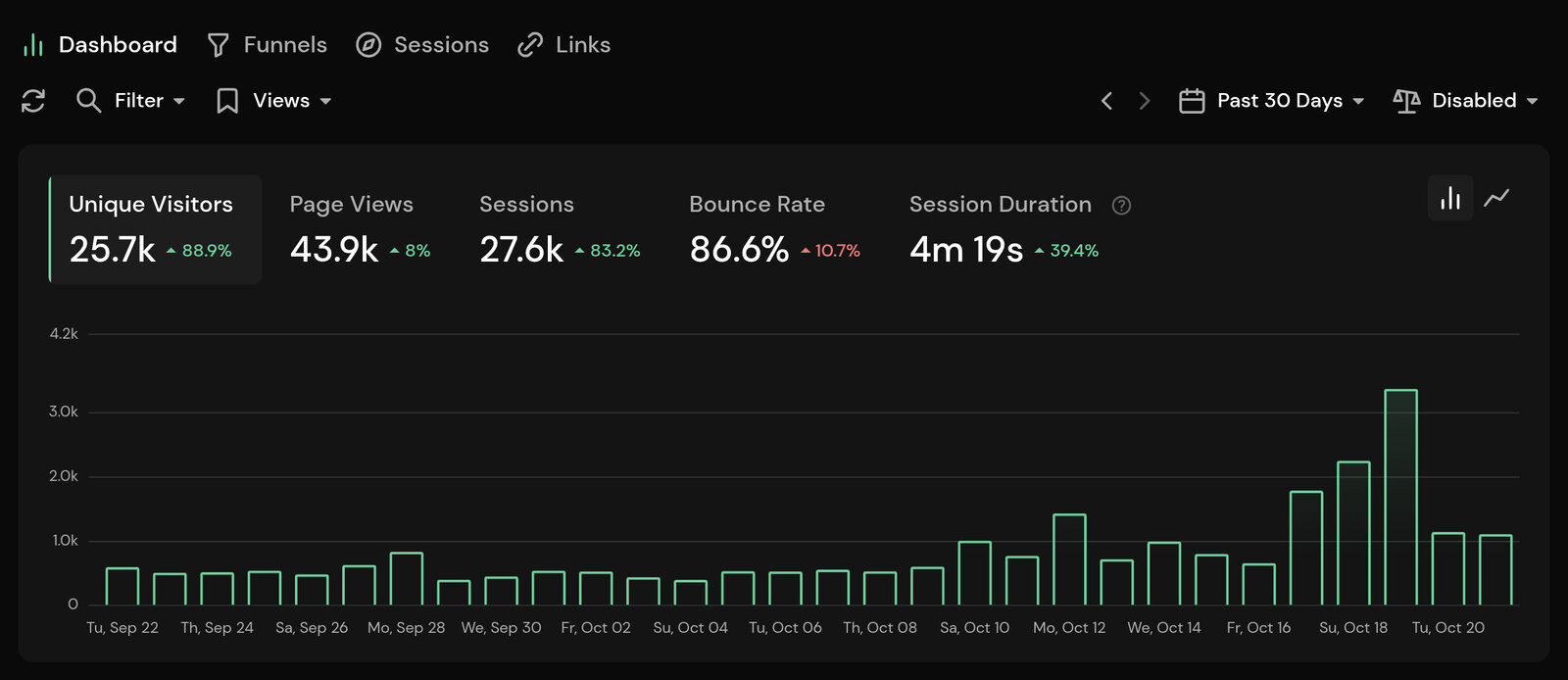
Made by Emvi Software GmbH, Pirsch is cookie-free analytics with its servers in Germany. It suits freelancers and agencies that need EU hosting and plenty of client sites on a tight budget.
What you get:
- A visitor hash with the date baked in, so recognition ends within 24 hours
- Unlimited data retention and team members from day one
- Events, conversion goals, a REST API and a Google Analytics importer
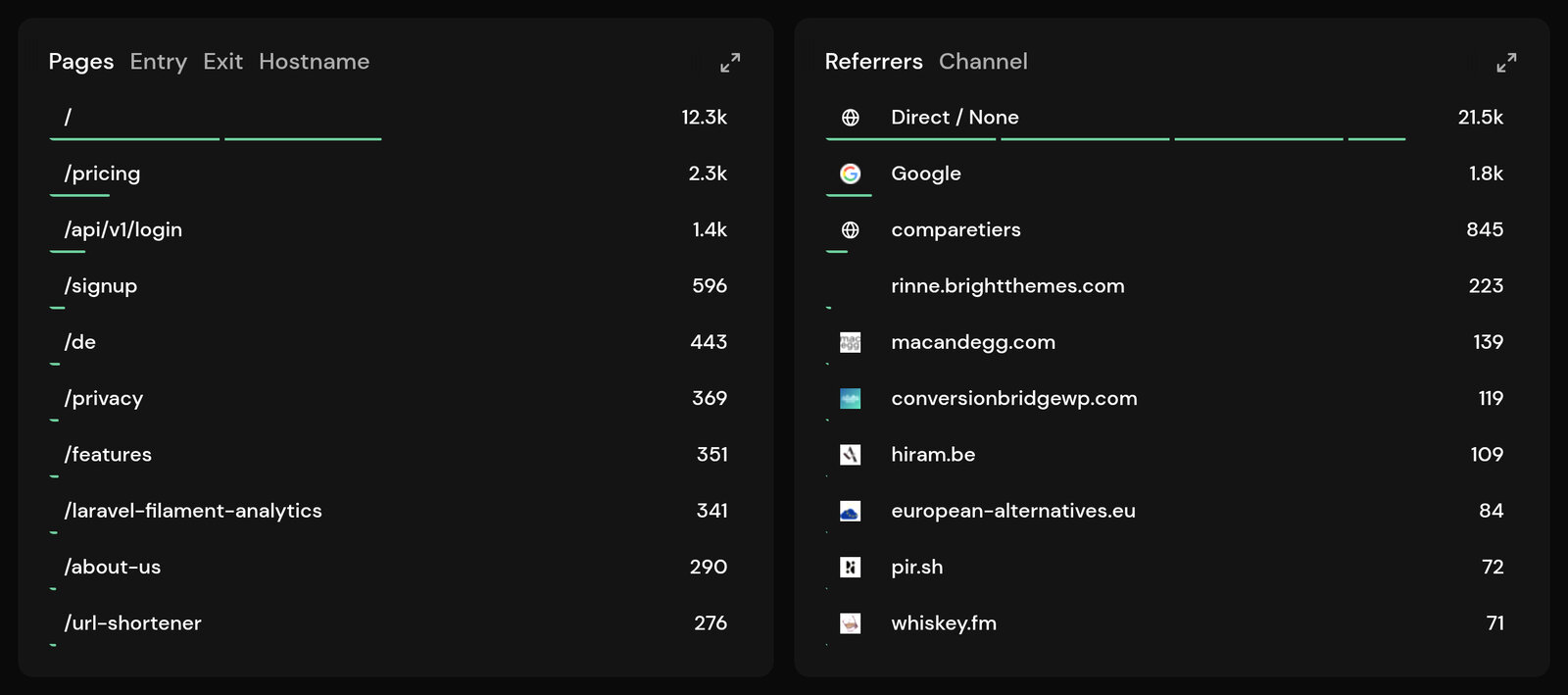
Pricing. Standard costs $6 a month with 10,000 pageviews and 50 sites, plus a 30-day trial. The $12 Plus plan drops the site cap and brings funnels, A/B tests and segments.
Watch out. Custom events and some session events eat into your allowance too. Only the core library is open source.
Cloudflare Web Analytics: Free Basics With Core Web Vitals
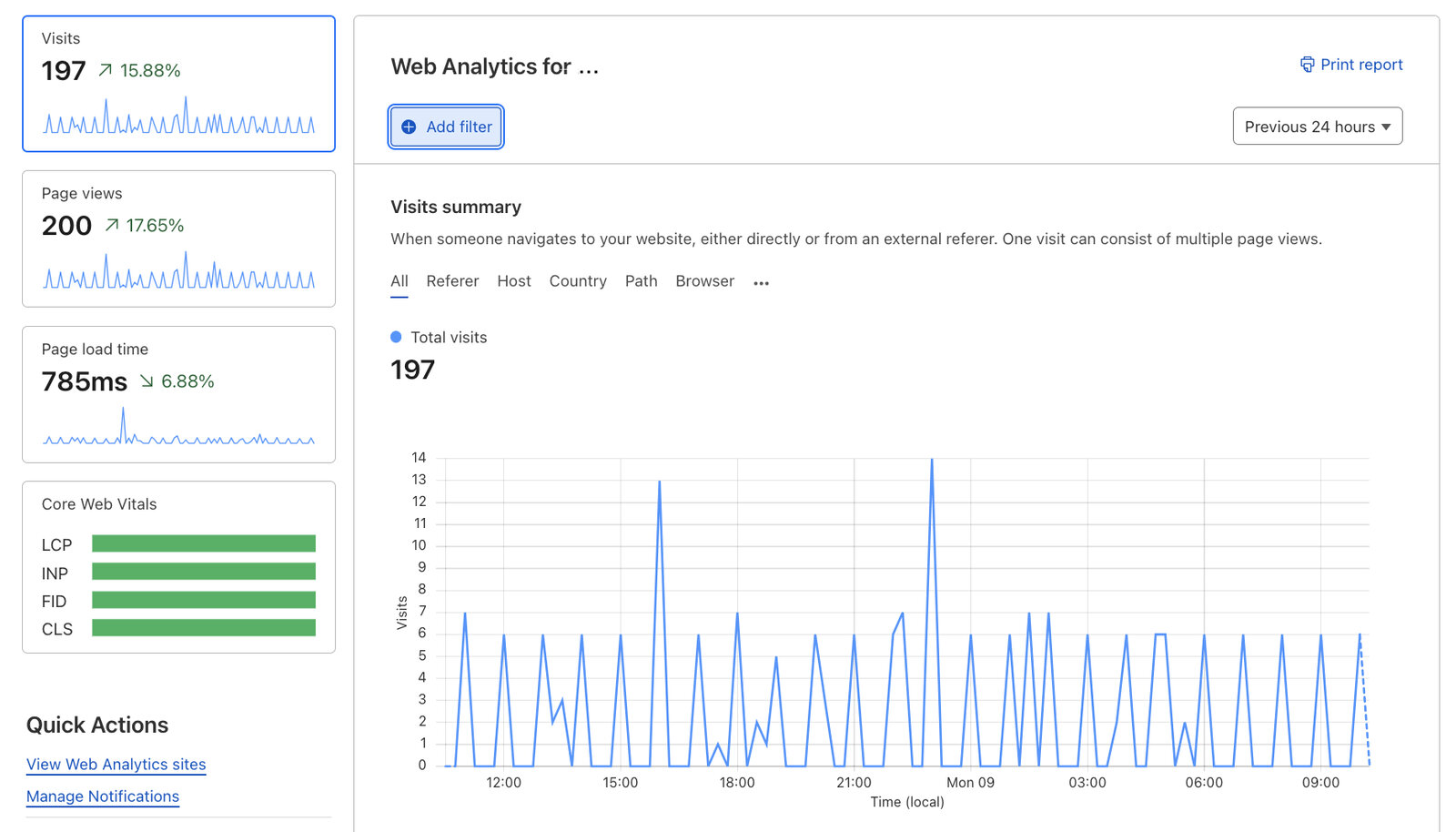
Cloudflare Web Analytics is the free stats dashboard from Cloudflare, the network and security company. It’s handy if you want free visit counts and page-speed data, especially on a Cloudflare-proxied site.
What you get:
- A beacon that stores nothing in the browser and counts visits without any ID
- No code to paste if your site already runs through Cloudflare
- Core Web Vitals beside your visit counts
- A GraphQL API
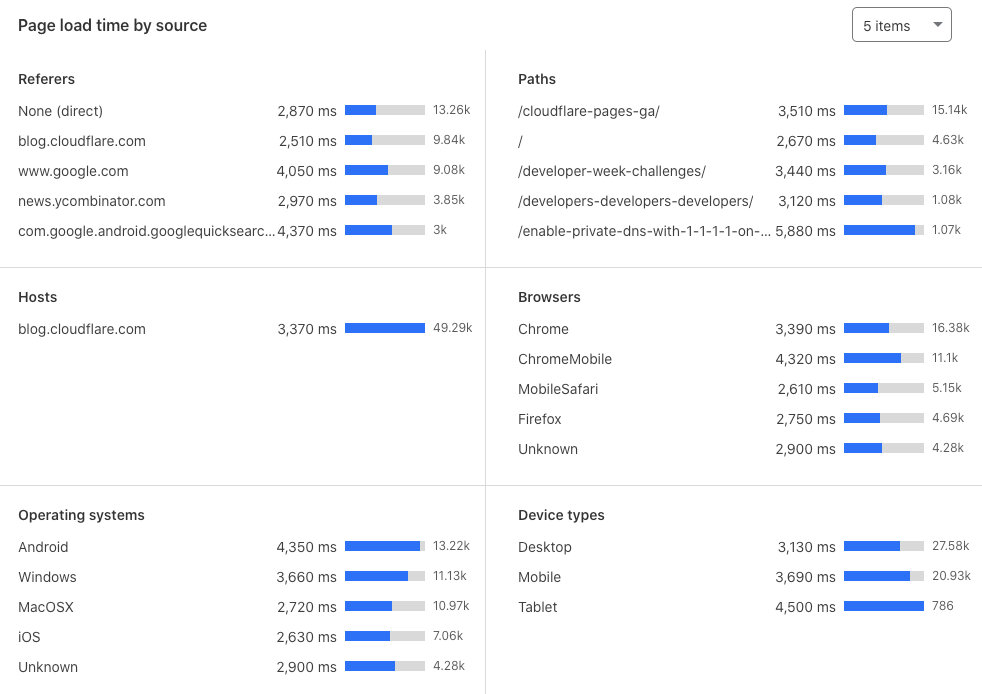
Pricing. It’s free, with a soft cap of ten sites if Cloudflare doesn’t proxy them.
Watch out. History stops at six months, and data gets sampled after the first week. Custom events and UTM tags aren’t supported yet, and Cloudflare doesn’t publish where the data is stored.
GoatCounter: Free, Open Source and Funded by Donations
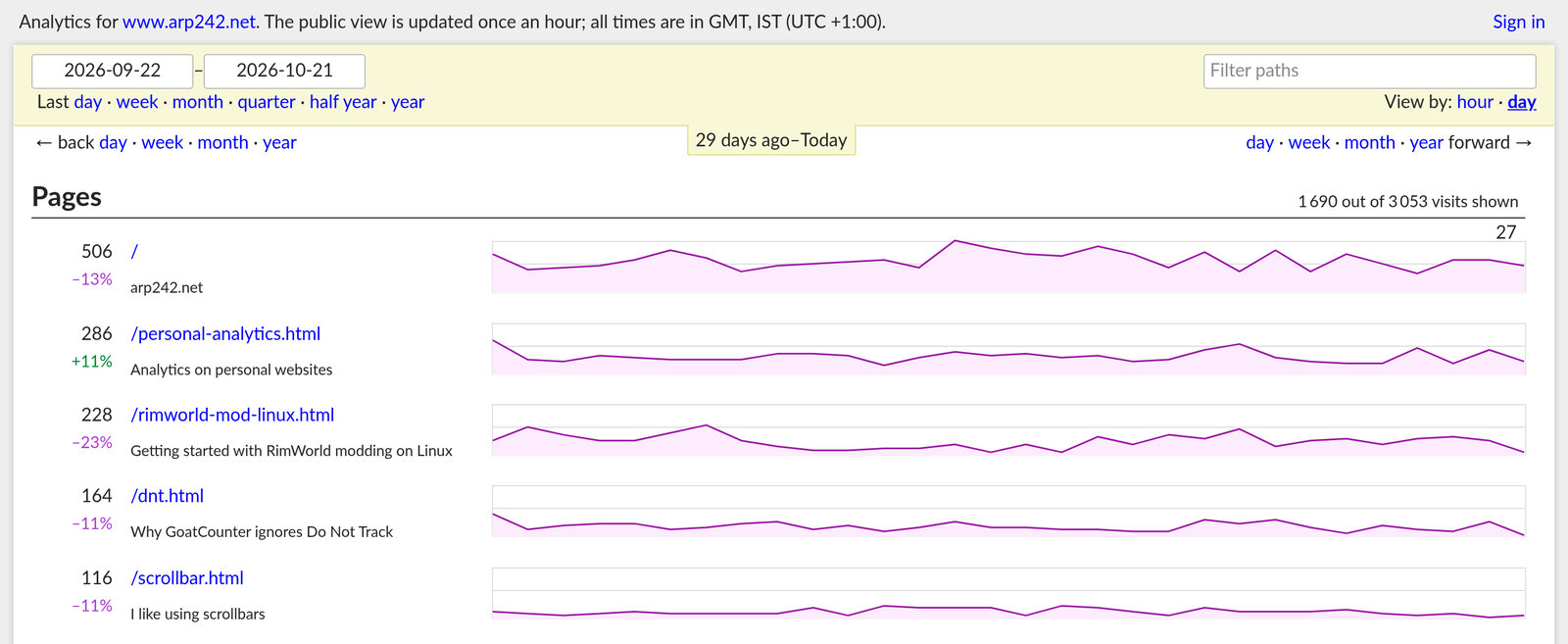
GoatCounter is the open-source counter that Martin Tournoij hosts for free, and you can also run it yourself. It fits personal sites, blogs and open-source projects that need simple counts and no bill.
What you get:
- A session held in server memory for eight hours, then dropped
- Counting by script, a no-JavaScript pixel, your backend or server logs
- Hosting in Finland and Germany, on Hetzner servers
- Public dashboards, if you’d like to share your stats
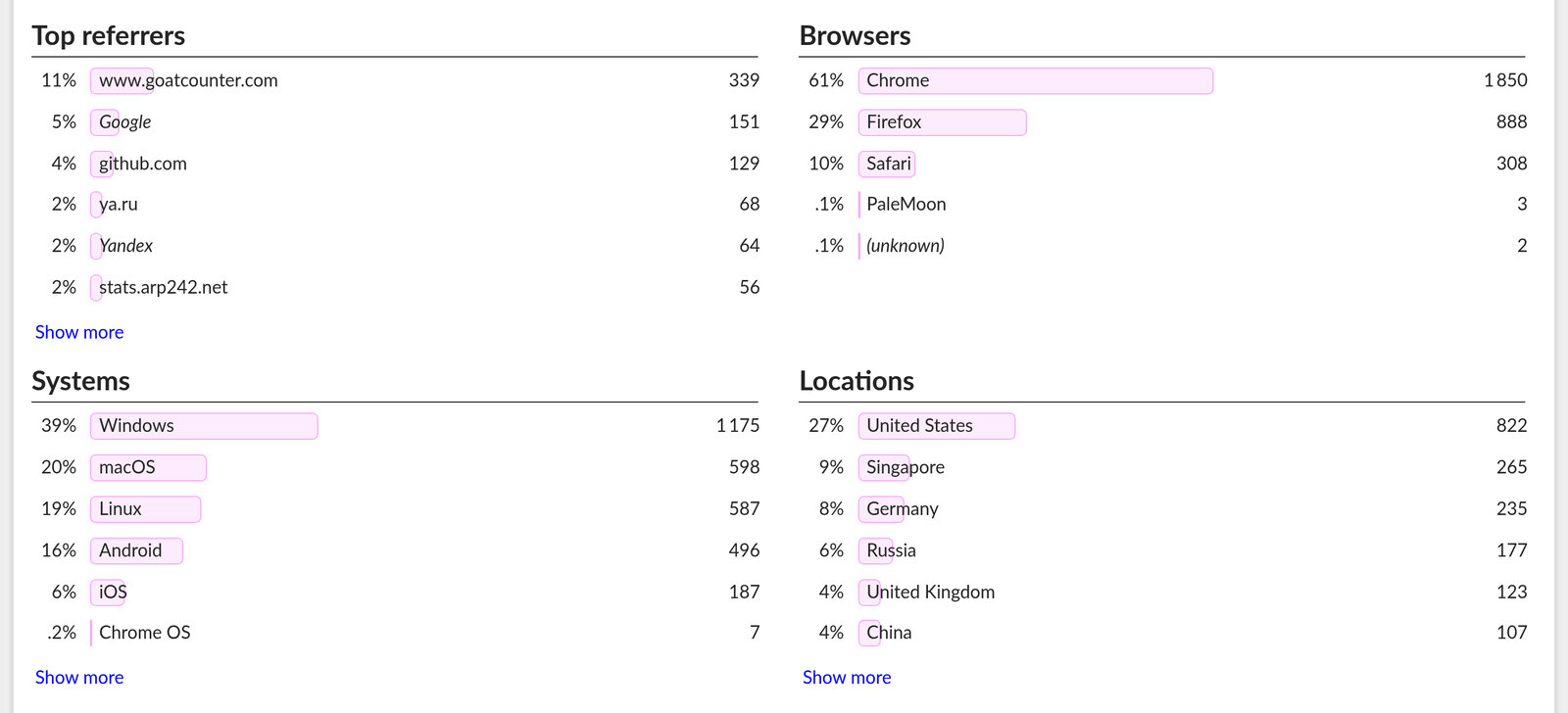
Pricing. There’s no charge for reasonable public use, and donations keep it running. Self-hosting is free too, under a modified EUPL license.
Watch out. Events stay basic, and you won’t find funnels. Compared with Umami it’s simpler, since Umami adds funnels, retention and journey reports.
Privacy-First Analytics Platforms Side by Side
Here’s the whole list in one table. Each price is the monthly list price of the cheapest paid plan, and every paid allowance counts custom events as well as pageviews.
| Platform | When to use it | Starts at | AI assistants (MCP) | Free option | Sites on entry plan | Data location | Open source |
|---|---|---|---|---|---|---|---|
| Statable | Leaving GA with history to keep | $9 for 10k pageviews | Official, reads and sets up | .edu, GitHub and GitLab Pages, with a widget | Unlimited | Netherlands | No |
| Plausible | A one-page dashboard | $9 for 10k pageviews | Community server (Sentry) | Self-hosted edition | 1 | Germany | Yes (AGPL) |
| Fathom | A portfolio of client sites | $15 for 100k pageviews | Community servers | No, 7-day trial | 50 | US, after IPs are stripped in the EU | Old Lite version only |
| Simple Analytics | Collecting the least data | $20 for 100k pageviews | Built-in AI chat, no MCP | 5 sites, 30 days of history | 10 (5 free) | Netherlands and Germany | Scripts only (MIT) |
| Umami | Self-hosting and retention reports | $20 for 1M events | Official, read-only (Pro or self-hosted) | Hobby plan for 1 site, or self-hosted | 20 (1 on Hobby) | EU or US, your choice | Yes (MIT) |
| Matomo | Large organizations and deep reports | $26 for 50k hits (Cloud) | Official, reads and edits segments | Self-hosted | 30 (Cloud) | Frankfurt (Cloud) or your server | Yes (GPL) |
| Pirsch | German hosting on a budget | $6 for 10k pageviews | Community servers | No, 30-day trial | 50 | Germany | Core library (AGPL) |
| Cloudflare Web Analytics | Free basics for sites on Cloudflare | Free | Cloudflare’s GraphQL server | Free | 10, unlimited if proxied | Not published | No |
| GoatCounter | Personal and open-source sites | Free | Community server | Free, with donations | No published limit | Finland and Germany | Yes, modified EUPL |
In short, free privacy-first tools cost you features and open-source ones cost you server time. With the paid clouds, compare price, site limits and where the data is stored.
How I Checked These Tools
Every detail above comes from the vendors’ own pages and dashboards, as with every review on this site. The screenshots show each tool’s public demo, except Cloudflare’s, which comes from its docs. I also ran each tracker on an empty test page, and only Matomo’s default setup set cookies.
Prices come from each vendor’s pricing page in October 2026, so check them again before you buy. Swetrix, PostHog and Vercel Web Analytics are worth a look too, but they didn’t make this round.
Decision Framework: Choosing a Privacy-First Analytics Tool
Answer these in order and stop at the first yes. If the first one stumps you, I’ve compared both routes in my piece on self-hosted versus cloud analytics.
- Must the data stay on your own server? Yes: Matomo, Umami, GoatCounter or Plausible’s Community Edition. No: keep going.
- Do you need it to cost nothing? Yes: Cloudflare Web Analytics, GoatCounter, or the free plans of Umami and Simple Analytics. No: keep going.
- Are you buying for an enterprise or a government body? Yes: Matomo, on your own servers or in its ISO 27001-certified cloud. No: keep going.
- Do you need product analytics such as cohorts, retention or session replays? Yes: Umami or Matomo. No: keep going.
- Do you want no visitor ID at all? Yes: Simple Analytics, or Cloudflare if its limits suit you. No: keep going.
- Still here? Start with Statable for your GA4 history, funnels, an API and MCP access for AI assistants. Put Plausible or Fathom next to it if you’d like a second opinion.
Frequently Asked Questions
What is privacy-first analytics?
It’s web analytics without cookies, fingerprinting or long-lived visitor IDs. It keeps personal data to a minimum, so there’s less to manage under GDPR, but it still shows visits, sources and conversions. You’ll also hear it called privacy-friendly analytics, private analytics or simply privacy analytics.
Does privacy-friendly analytics need a cookie banner?
Usually not, because the consent rule in ePrivacy Article 5(3) is about storing or reading data on a device. GDPR and CCPA can still apply to personal data, and chat widgets or ad pixels may need consent anyway. If yours do, here’s how I’d build a consent banner that respects your visitors.
Is there a free privacy-first analytics tool?
GoatCounter and Cloudflare Web Analytics are free, and Umami and Simple Analytics have free plans. You can self-host Matomo, Plausible, Umami or GoatCounter for free. Statable is free on .edu domains and on GitHub or GitLab Pages if the site shows its widget.
Plausible vs Umami: which one should I pick?
Pick Plausible if you want one clean page of numbers and your data kept in Germany. Pick Umami if you want funnels and retention reports on every plan, or a free cloud plan for one site. Each one has open code, and you can self-host either.
Can I keep my Google Analytics history when I switch?
Six of the nine can: Statable, Plausible, Fathom, Simple Analytics, Matomo and Pirsch import it as summary reports. Umami’s team loads CSV files on its Pro plan, GoatCounter only adds page totals, and Cloudflare has no importer. Either way, save a full export of your Google Analytics data before you move.
Can I ask ChatGPT or Claude about my website traffic?
Yes, through an MCP server, the connector that lets an AI assistant query your analytics. Statable, Umami and Matomo run official ones. Statable’s can also add sites, goals and funnels if you allow it, Matomo’s can edit segments, and Umami’s only reads. Plausible, Fathom, Pirsch and GoatCounter rely on community-built servers, while Simple Analytics has its own AI chat. Check any figure that matters in the dashboard itself.
Which privacy-first analytics platform suits an enterprise or a government site?
Matomo fits best when everything has to run in-house or in an ISO 27001-certified cloud in Frankfurt. Plausible and Umami add single sign-on on their Enterprise plans. Fathom keeps EU visitors’ IP addresses inside the EU, though the stripped records sit in the US.
What can’t privacy-first analytics do?
Most tools here forget a visitor within a day, which rules out cohorts and retention outside Umami and Matomo. Only Matomo and Umami (self-hosted or on Business) record session replays. Errors mostly show up as 404 counts, though Matomo can also log JavaScript errors. Pair your analytics with an error monitor, and expect ad blockers to catch some scripts.
How accurate is cookieless analytics when visitors use ad blockers?
No tool here counts every visit, since ad blockers stop some tracking scripts. Cookieless tools don’t lose the visitors who’d reject a consent banner, because nobody is asked to accept. For counts that blockers can’t touch, GoatCounter can also read your server logs or take hits from your backend.
Bottom Line
All nine privacy-first tools show what people read and where they came from. Any of them works as a Google Analytics alternative for a typical site. They differ on hosting, price and depth, so let the decision list cut the field. Then try the two or three that survive and keep the one you’ll actually open each week.

Leon Bauer
Explorer of web analytics and digital measurement tools. I dive deep into features, limitations, and use cases of platforms like Google Analytics, Matomo, Plausible, and others. My mission is to demystify analytics through honest reviews and practical guides.
More about me →